
Kitchen Decor Selection: 7 Rules for Styling a Luxury Kitchen

The kitchen decor you choose can be the difference between a beautifully renovated kitchen that feels genuinely luxurious and one where expensive individual features never quite come together.
When homeowners start collecting kitchen decor ideas, it is easy to focus on the finishing touches: pendant lights, stools, vases, artwork or ceramics. But in a well-designed renovation, the luxury look starts much earlier. Cabinetry, benchtops, splashbacks, flooring, handles, tapware and lighting establish the visual foundation that every decorative choice needs to work with.
For Brisbane homeowners planning a renovation, this means thinking about kitchen decor while the kitchen is still being designed, rather than waiting until everything has been installed. The aim is not to fill the room with expensive objects. It is to create a balanced space where materials, colours, textures and details feel intentional.
Why Kitchen Decor Should Be Planned Before Your Renovation Is Finished
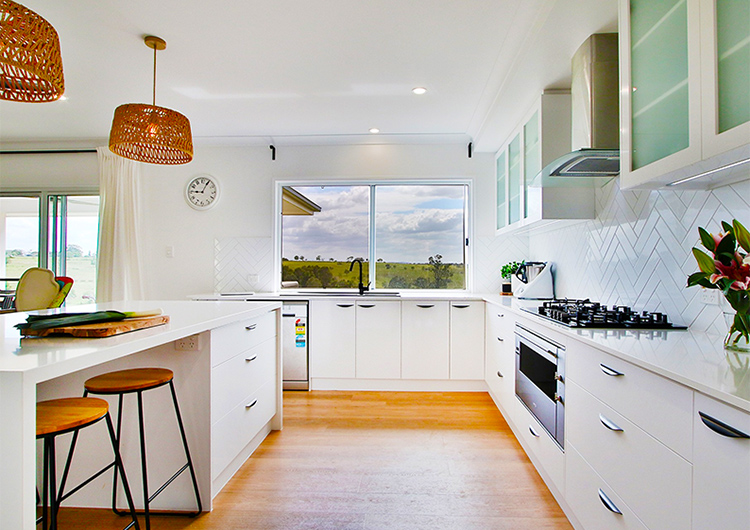
A successful luxury kitchen has two design layers. The first is permanent: cabinetry, stone, splashbacks, fixtures, hardware and lighting. The second is flexible: stools, artwork, ceramics, greenery, bowls and other styling pieces.
The permanent layer should do most of the visual work. If those selections are cohesive, the flexible layer can remain relatively simple. This approach also gives you a better opportunity to resolve important details before cabinetry goes into production or plumbing and electrical work are finalised.
Lighting is a good example. You should plan your kitchen lighting during the design stage. Moving fittings after the kitchen has been installed can mean additional cabling, ceiling repairs and repainting. You should also be aware that there is no single lighting product that is best for every application. Instead, lighting should be selected according to its purpose and the effect you want to achieve.
When planning a high-end kitchen renovation, it therefore makes sense to consider function, finishes and styling together rather than treating decoration as a separate final step.
7 Kitchen Decor Rules for a Luxury Finish
Creating a luxury finish is less about choosing the most expensive materials and more about making sure every element works together. From cabinetry and benchtops to lighting, hardware and decorative details, the best kitchen decor feels balanced, intentional and suited to the scale of the space. These seven rules can help you make more confident styling decisions and create a kitchen that feels polished without becoming overdone.
Rule 1. Choose One Clear Design Direction First

Before choosing individual finishes, decide what you want the room to feel like.
Is it warm contemporary, minimalist, coastal, modern classic, Hamptons-inspired or industrial? Once that direction is clear, it becomes much easier to judge whether a particular stone, cabinet colour, tap or pendant belongs in the same scheme.
Good luxury kitchen decor is rarely created by choosing every item in isolation. Start with a restrained palette and compare physical samples together where possible. A timber door sample may appear warmer beside one stone than another, while a metallic finish can look very different beside cool white cabinetry.
This is one reason visiting a kitchen showroom can be valuable. Craftbuilt’s kitchen showroom in Stones Corner allows homeowners to see and touch different cabinetry and benchtop finishes rather than making major selections entirely from photographs or screen colours.
Rule 2. Let One Feature Lead Your Kitchen Decor

A luxury kitchen does not need five competing focal points.
Choose the feature you want the eye to notice first and allow the surrounding elements to support it. That hero might be a dramatically veined benchtop, a sculptural island, detailed cabinetry, an unusual splashback or a statement pendant.
If the island uses expressive stone, for example, quieter cabinet doors and simple lighting may give it more impact than adding another bold surface immediately behind it. If patterned tiles are the feature, a more restrained benchtop may create better balance.
Thoughtful selection can prevent a premium renovation from looking unnecessarily busy. Luxury often comes from knowing where to stop.
Your benchtop is particularly important because of its size and prominence in the room. Finding a kitchen benchtop selection guide that you can trust will help you understand why appearance should be considered alongside durability, maintenance and how the surface will actually be used.
Rule 3. Build the Palette Around Material, Texture and Tone

Many successful luxury kitchens use a relatively controlled colour palette while introducing depth through texture.
You might combine warm timber cabinetry with softly veined stone and brushed metal, or pair deep-coloured joinery with a pale benchtop and timber stools. A neutral kitchen can gain character through fluted detailing, tactile tiles, timber grain or subtly textured surfaces rather than relying on several strong colours at once.
This approach works especially well for modern kitchen decor because it creates visual interest without making the room feel crowded.
Rather than asking whether every finish matches exactly, consider whether their undertones relate to each other. Warm whites, creamy stone and brass can create one type of palette, while cooler greys, crisp whites and nickel can produce another.
The splashback is particularly important because it visually connects cabinetry and benchtops. Craftbuilt’s kitchen splashback guide recommends considering the splashback alongside cabinetry, benchtops, flooring and fixtures rather than choosing it in isolation at the end of the renovation.
Rule 4. Treat Lighting as Part of Your Luxury Kitchen Design

Lighting needs to do more than simply make the room bright.
A well-planned kitchen usually benefits from several layers. These can include task lighting for food preparation and cooking, ambient lighting for comfortable overall illumination and accent or decorative lighting for features such as an island, splashback, artwork or display cabinetry.
A layered approach to kitchen lighting should be seen as a combination of task, ambient, accent and decorative lighting. Different light sources allow the space to respond to the different ways a kitchen may be used throughout the day.
Choose lighting according to the desired application and effect. Considering matters such as light distribution, dimming and product suitability should also be on your mind when thinking about your choices.
Scale matters too. A pendant that looks modest in a showroom can overwhelm a smaller island once installed. Conversely, a tiny fitting can disappear above a large island or beneath a high ceiling. Checking pendant proportions carefully and considering how the fixture relates to the style and scale of the kitchen is a step you should take before buying anything.
The best luxury kitchen design considers pendant size, position, switching, cabinetry lighting and natural light before electrical work is finalised. That way, lighting supports both everyday tasks and the appearance of your chosen materials.
Rule 5. Coordinate Kitchen Decor, Hardware and Tapware Without Over-Matching

Handles, mixers, sinks, appliance trims and lighting details may be relatively small, but collectively they can change the character of a kitchen.
You do not necessarily need every metallic element to be identical. In fact, an overly matched scheme can sometimes feel more like a display than a lived-in interior. The objective is to create a relationship between the finishes.
A brushed nickel mixer may sit comfortably with stainless appliances and understated cabinet pulls. Warm brass handles can complement timber cabinetry and warmer stone. Black fixtures can create useful definition within a pale scheme, particularly when the finish is repeated selectively elsewhere.
Try to avoid introducing several unrelated metals simply because each individual item looked attractive on its own. Repetition should appear intentional, and the permanent selections should create enough consistency to allow smaller decorative elements to change over time.
Rule 6. Protect Negative Space and Keep Benchtops Deliberately Uncluttered

One of the simplest kitchen styling ideas for making a renovated space feel more luxurious is to leave some of it empty.
Large uninterrupted surfaces allow stone, joinery and architectural details to be appreciated. They also make carefully chosen decorative pieces feel more significant.
Instead of covering an island with a fruit bowl, knife block, kettle, toaster, candles, cookbooks and several ornaments, consider one or two purposeful pieces. A sculptural bowl, a vase of foliage or a grouped tray may be enough.
Good storage makes this significantly easier. Appliance garages, deep drawers, pantry zones and well-planned internal cabinetry can keep frequently used items accessible without requiring everything to remain on display.
Restraint is particularly valuable around a statement island or splashback. Houzz Australia also recommends being selective with feature lighting rather than attempting to highlight every surface, as too many visual focal points can introduce unnecessary clutter.
The result does not need to feel empty or sterile. It should simply give the eye somewhere to rest.
Rule 7. Choose Styling Pieces That Suit the Scale of the Room

Proportion is easy to overlook when decorative pieces are purchased individually.
A small vase may look lost in the middle of a three-metre island. Three oversized pendant lights could overwhelm a compact kitchen. Bar stools with thick frames may make a narrow walkway appear tighter, while very delicate stools may look visually insignificant beside a large stone island.
Look at every piece in relation to the room around it.
This applies to artwork, pendant lights, stools, open-shelf displays, greenery and even the size of decorative bowls. Well-planned kitchen decor feels considered because objects have enough visual presence for the space without competing with the architecture.
Houzz Australia similarly recommends considering proportion when choosing decorative kitchen lighting, noting that a fitting that is too large may overpower a small kitchen, while one that is too small can become lost in a larger room.
If you are unsure about an item, mark out its dimensions before ordering or temporarily position something of a similar size in the proposed location. This can make scale much easier to judge than relying on product photographs alone.
What Kitchen Decor Is Worth Choosing With Your Designer?
Not every vase, cookbook or artwork needs to be decided during a renovation, but elements that affect cabinetry, electrical work, plumbing or the overall material palette are worth discussing early.
Before cabinetry enters production, consider:
- Cabinetry colours, profiles and finishes
- Benchtop material and edge details
- Splashback material, colour and pattern
- Sink and tapware
- Handles or handleless profiles
- Appliance finishes
- Pendant positions and approximate sizes
- Integrated or under-cabinet lighting
- Visible shelving and display cabinetry
- Island seating and the space required around it
These decisions influence one another. A dramatic stone selection may change which splashback looks best. Pendant lights can affect the visual balance of an island. Stool dimensions influence circulation, while handles can push cabinetry towards either a more contemporary or traditional appearance.
Bringing samples and specifications together before installation can reduce the risk of selecting expensive items that look appealing individually but do not feel connected once installed in the same room.
It can also help you assess practicality alongside appearance. A beautiful room still needs to work for food preparation, cleaning, entertaining and everyday family life. This is why Craftbuilt approaches kitchen renovations as a combination of layout, functionality, materials and individual design choices rather than appearance alone.
Create Kitchen Decor That Looks Considered, Not Complicated
The strongest luxury spaces are not necessarily those containing the greatest number of premium products. They are the ones where the layout, materials, lighting and details feel as though they were selected for the same home.
When planning kitchen decor, prioritise cohesion, proportion, useful negative space and materials that suit the way you live. Choose a clear design direction, let one or two features lead and give the surrounding finishes enough room to support them.
If you are planning a Brisbane kitchen renovation, Craftbuilt Kitchens can help you compare cabinetry, benchtops, splashbacks, finishes and other important selections before you commit.
Visit the Craftbuilt Kitchens showroom to see materials in person, discuss your ideas with an experienced kitchen designer and develop a kitchen that looks considered while still working beautifully for everyday life.
Frequently Asked Questions
What makes a kitchen look luxurious?
A luxury kitchen usually feels cohesive rather than overly decorated. Well-proportioned cabinetry, quality materials, layered lighting, coordinated finishes and carefully chosen styling pieces all contribute to a more refined result. Leaving enough visual space around feature elements can also make the room feel more considered.
How do I choose a colour palette for a luxury kitchen?
Start with one clear design direction and build the palette around two or three complementary tones. Consider cabinetry, benchtops, splashbacks, flooring and metal finishes together rather than selecting each one separately. Introducing texture through timber, stone or tactile surfaces can add depth without relying on too many colours.
Should all kitchen handles, tapware and lighting finishes match?
They do not necessarily need to match exactly. A more sophisticated approach is to choose finishes that relate to one another through colour, undertone or style. Repeating one dominant metal finish and introducing another selectively can create interest while still keeping the overall design cohesive.
How can I make my kitchen look expensive without making it feel cluttered?
Prioritise a few strong features instead of trying to make every element stand out. Keep benchtops relatively clear, use concealed storage where possible and select decorative pieces that suit the size of the room. One statement pendant, a striking benchtop or a well-designed island can often have more impact than several competing features.
When should I choose decorative finishes during a kitchen renovation?
Permanent selections such as cabinetry colours, benchtops, splashbacks, tapware, handles and lighting should ideally be considered during the design stage. Decisions that affect cabinetry, plumbing or electrical work are much easier to resolve before installation begins. Flexible items such as artwork, ceramics and greenery can be added once the kitchen is complete.
What are the best styling pieces for a kitchen island?
A kitchen island generally looks more polished when styling is kept simple. Depending on its size, you might use a sculptural bowl, flowers, greenery or a small grouped arrangement. The goal is to complement the island rather than cover the benchtop or interfere with food preparation and seating.
Is it worth working with a kitchen designer when choosing finishes?
For a full renovation, professional design input can be valuable because cabinetry, benchtops, splashbacks, lighting, fixtures and appliances all affect one another. A kitchen designer can help you compare samples, assess proportions and make selections that work together before construction or installation begins.
With over 21 years of extensive experience in cabinetmaking and home renovations, Corey Cameron leads Craftbuilt Kitchens as its Director. Corey’s deep knowledge and expertise are rooted in decades of hands-on work, ensuring the highest standards in kitchen and home renovations for every home they work on.


