
Kitchen Splashback Guide: Stone & Tile Trends to Try

A kitchen splashback does more than protect your walls from spills and splatters; it also gives you an opportunity to shape the overall look and feel of your new kitchen. From softly veined stone to handmade-look tiles, the right finish can connect your cabinetry, benchtop, flooring and fixtures while creating a feature that feels considered rather than added as an afterthought.
If you want to give your kitchen a fresh and distinctive look during a renovation, exploring different splashback ideas is a practical place to start. The right kitchen splashback should suit the way you cook, the amount of maintenance you are comfortable with and the style you want to achieve. It should also be selected early enough to coordinate with the other finishes in your design.
Kitchen Splashback Guide: Stone & Tile Trends to Try
Kitchen Splashback: Stone or Tile?
Stone and tile can both create a beautiful result, but they offer different advantages. Your kitchen splashback choice may come down to whether you prefer a continuous surface with minimal joins or a tiled finish that provides more flexibility in colour, shape, pattern and layout.
A stone or slab-style surface can create a streamlined appearance, particularly when it matches or complements the benchtop. Tiles, meanwhile, can introduce texture, movement and personality. They also give you the option to adjust the look through the tile format, laying pattern and grout colour.
Before deciding, compare the following:
| Consideration | Stone or slab-style surface | Tile surface |
| Overall appearance | Continuous, refined and streamlined | Flexible, decorative and highly customisable |
| Joins and grout | Few visible interruptions | Grout lines depend on the tile size and layout |
| Design options | Veining, tonal movement and bookmatched effects | Colours, shapes, patterns, textures and laying styles |
| Maintenance | Depends on the chosen material and finish | Tile faces are generally straightforward to wipe, while grout also needs attention |
| Cost factors | Material, measuring, fabrication, cut-outs and installation | Tile price, laying complexity, wastage, grout and labour |
| Best suited to | Cohesive, contemporary or premium designs | Classic, character-filled or personalised designs |
Neither option is automatically better. The most suitable choice is the one that works with your room, renovation budget and preferred level of upkeep.
Stone Kitchen Splashback Trends to Consider
Stone and stone-look surfaces can create a strong visual connection between the horizontal and vertical elements of a kitchen. They are especially effective when the veining, colour and scale are planned alongside the cabinetry rather than chosen separately at the end.
Full-Height Stone Surfaces
Extending a slab from the benchtop to the overhead cabinetry or rangehood can give the cooking area a clean and uninterrupted appearance. With fewer visual breaks, the surface can become a feature without relying on a bright colour or complex pattern.
Before ordering, confirm where the joins, power points, corners and appliance cut-outs will sit. Prominent veining should also be mapped in advance so the finished installation looks intentional.
How to Match Your Kitchen Splashback with the Benchtop
Using the same or a closely coordinated material on the benchtop and wall can help the kitchen feel cohesive. When the kitchen splashback continues the benchtop pattern, review the slab vertically as well as horizontally because the veining may look different once it is installed upright.
A highly patterned island may be better paired with a quieter wall finish, while a simple benchtop can leave room for stronger movement behind the cooktop. Your designer can help you assess how the surfaces will sit together across the entire room, rather than judging them from small samples alone.
Natural Stone

Natural stone options such as marble, granite and travertine can give a kitchen an elegant and individual feature. Because each slab has its own veining, colour shifts and markings, no two installations will look exactly alike.
Natural stone can be durable, but the maintenance requirements vary by material and finish. Ask whether the selected product needs sealing, how often it may need to be resealed and which cleaning products are appropriate. It is also wise to view the actual slab before fabrication whenever possible.
Porcelain and Sintered Slab Looks

Porcelain and resin-free sintered surfaces can provide a large-format look with fewer grout lines. Depending on the product, they may be available in finishes that resemble marble, concrete or natural stone.
Product composition matters. Australia’s engineered stone prohibition applies to the manufacture, supply, processing and installation of engineered stone benchtops, panels and slabs. Safe Work Australia identifies ceramic tiles and certain resin-free porcelain and sintered products as excluded from the engineered stone definition, although safe processing obligations still apply. Always confirm the exact product specification with your kitchen designer, fabricator and supplier before ordering.
Kitchen Splashback Tile Trends to Try
A tiled kitchen splashback remains one of the most flexible choices for a renovation because it can be tailored through colour, scale, finish, grout and laying pattern. The key is to choose a style that supports the cabinetry and benchtop rather than competing with every other feature in the room.
Large-Format Tiles

Large-format tiles can create a cleaner appearance by reducing the number of grout lines across the wall. They work particularly well in contemporary and minimalist kitchens where a calm, uninterrupted finish is preferred.
Because the tiles are larger, careful wall preparation and accurate installation are important. Discuss the positioning of cuts, corners and power points before work begins so small or awkward tile sections do not distract from the result.
Subway Tiles with Updated Layouts

Subway tiles are a timeless option that can suit a wide range of kitchen styles. These rectangular tiles are available in gloss, matte and textured finishes, making them easy to adapt to both traditional and modern interiors.
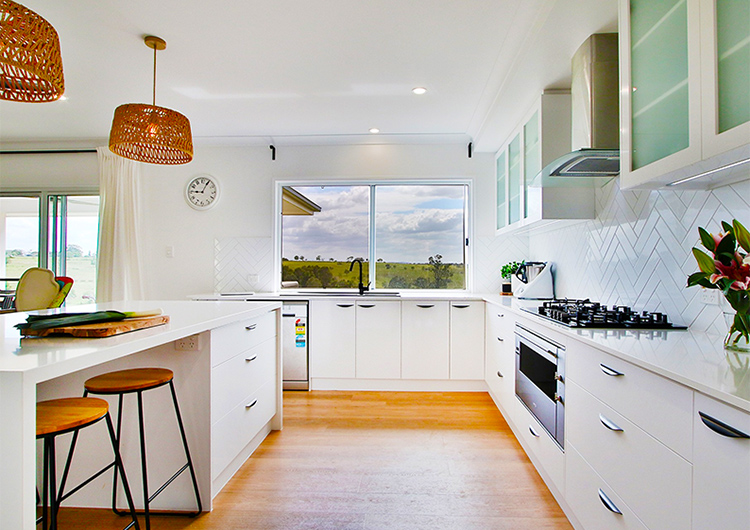
Instead of automatically choosing a standard brick bond, consider a vertical stack, horizontal stack, herringbone or double-herringbone layout. Contrasting grout can emphasise the pattern, while a grout colour closer to the tile creates a softer and more continuous look.
More detailed layouts can involve additional cutting, labour and wastage, so include the pattern in your quotation discussions rather than comparing options based only on the price of the tiles.
Handmade-Look and Zellige-Style Tiles

Tiles with tonal variation, irregular edges and gently reflective surfaces can bring warmth and character to a kitchen. Their appeal comes from the differences between individual pieces, so the finished wall will not look perfectly uniform.
Ask to see multiple samples or a larger display before making your decision. A single tile may not show the full range of colours, textures and edge variations. These surfaces can also be less even than standard flat tiles, which may influence cleaning and installation.
Textured and Fluted Tiles

Textured tiles can add depth and character to your kitchen. Options range from geometric shapes and fluted profiles to floral motifs and abstract lines, with ceramic and porcelain products available in many different finishes.
This choice works well when you want the splashback to become a focal point. However, deeper grooves and raised details can hold more cooking residue than a flat surface, particularly behind a cooktop. Consider how regularly you cook and how easy the chosen profile will be to wipe.
Kit Kat Tiles and Small-Format Mosaics

Kit Kat tiles and mosaics introduce fine detail and movement. They can be laid vertically or horizontally and may work well across an entire wall or as a smaller feature behind a sink, coffee station or rangehood.
Smaller formats create more grout lines, so grout colour and maintenance should be part of the decision. Matching the grout closely to the tile can soften the overall effect, while contrasting grout makes the pattern more prominent.
Bold Patterns and Warm Colours

Splashbacks with bold patterns or vibrant colours are ideal for homeowners who want to make a statement. This is one of those splashback ideas that can help express personality and transform neutral cabinetry into a more energetic and individual space.
For a warmer and more enduring interpretation, consider soft terracotta, sage, dusty blue, mushroom, sand, clay or warm white. These tones can still add character without overwhelming the room. Patterned tiles are often most effective when the surrounding cabinetry and benchtop are comparatively restrained.
Other Splashback Ideas Worth Considering
Stone and tile may be the focus of this guide, but other materials can also suit particular kitchen styles and practical requirements.
Glass Splashbacks

Glass creates a sleek and modern look. Its reflective surface can increase the sense of light and space, which may be helpful in a smaller kitchen. It is available in a wide range of colours and can be customised to suit the room.
Its smooth surface is also easy to wipe, making it a practical option for busy households. Glass can work particularly well when you want a simple block of colour without the grout lines associated with tiles.
Mirrored Splashbacks

A mirrored surface can make a compact kitchen feel more expansive and can reflect light around the room. It adds a polished, contemporary touch, although it generally needs frequent cleaning to keep fingerprints, steam marks and splashes from affecting its reflective finish.
Before choosing a mirrored surface, consider what it will reflect. A well-positioned installation can reflect an attractive view or increase the sense of openness, while a poorly positioned one may highlight cluttered preparation areas.
Pressed Metal

Pressed metal brings a retro or industrial character to the kitchen and is available in patterns and finishes such as silver, copper and bronze. It can be an effective feature in vintage-inspired spaces.
The exact material, coating and installation requirements should be confirmed for the intended cooking zone. Also consider whether a highly detailed pattern will complement or compete with the surrounding cabinetry.
Timber Splashbacks

Timber and timber-look finishes can introduce warmth and suit rustic, Scandinavian or nature-inspired kitchens. They may be particularly effective in selected areas where you want to connect the kitchen with timber flooring, shelving or cabinetry.
Before choosing this style, confirm that the product is appropriate for the proposed location and that its finish, heat resistance and cleaning requirements are suitable for kitchen use.
Terrazzo Splashbacks

Terrazzo combines chips of marble, glass or stone to create a playful, varied appearance. It can work especially well in mid-century modern kitchens or rooms that need a more individual feature.
Available formats and maintenance requirements vary, so check whether the selected product is a tile, slab or another type of surface system. The size, colour and density of the chips should also be assessed alongside the benchtop and cabinetry.
Chalkboard Paint

Chalkboard paint can create a casual and interactive feature where family members can write shopping lists, recipes or messages. It may suit an eclectic kitchen or a secondary wall area.
However, it is generally less practical than a smooth, purpose-designed surface in the main cooking and washing zones. Consider using it on a separate wall rather than directly behind a cooktop or sink.
How to Choose the Right Kitchen Splashback
Before approving your kitchen splashback, consider the overall style of the room, the maintenance required, the available budget and the location of the surface. A finish that looks impressive in a showroom may be less suitable if it needs more cleaning than your household wants to manage.
The material should also suit how the kitchen will be used. A household that cooks frequently may prioritise smooth surfaces and fewer joins, while a homeowner creating a display-focused entertaining space may place more emphasis on pattern, texture or visual impact.
Think About Cleaning and Maintenance
Smooth surfaces with fewer joins are often simpler to wipe. Tiles may be easy to clean on the face, but grout also requires attention. Textured finishes can add visual interest while creating more edges and grooves where residue may collect.
Ask whether the product needs sealing, which cleaners are recommended and whether the finish is likely to show fingerprints, water marks or grease. Understanding these requirements before ordering will help you choose a finish that suits your routine.
Coordinate Cabinets, Benchtops and Flooring
The wall finish behind a cooktop needs to be suitable for the appliance, surrounding surfaces and installation conditions. Do not rely on one general clearance measurement. Check the appliance manufacturer’s instructions and have the final arrangement reviewed during the design and trade-planning stages.
Also confirm whether wall preparation, removal of the old surface, power-point changes, sealing and trade coordination are included in the renovation scope. Making these decisions early can prevent delays or last-minute material changes.
Look at More Than One Sample
Small samples can make it difficult to understand how veining, colour variation or pattern repetition will look across a full wall. Where possible, view:
- A complete stone slab
- Several tiles from different boxes
- A larger manufacturer display
- The grout colour beside the tile
- Samples under warm and cool lighting
- The proposed finish beside your cabinet and benchtop selections
For natural stone and handmade-look tiles, variation is part of the finished appearance. Seeing a wider sample range will help you decide whether that variation suits the result you want.
Review the Full Quote
Before approving the work, ask whether the quote includes:
- Material supply
- Site measuring
- Fabrication and cut-outs
- Delivery
- Installation
- Grout, sealant or sealing
- Wall preparation and repairs
- Removal of the existing surface
- Power-point and appliance coordination
- Pattern matching or slab-vein positioning
- Additional labour for complex tile layouts
A clear scope makes it easier to compare options accurately and avoid unexpected additions later. The lowest material price may not result in the lowest installed price once fabrication, preparation, cutting and labour are considered.
Kitchen Splashback Checklist Before You Decide

Use this checklist when comparing samples and quotations:
- Does the material suit how often you cook?
- Is it appropriate for the cooktop and proposed location?
- How many joins or grout lines will need cleaning?
- Does the surface require sealing?
- Have you viewed a full tile range or the actual slab?
- Does it coordinate with the cabinetry, benchtop and flooring?
- Where will cuts, joins and power points appear?
- Is installation and wall preparation included in the quote?
- Is the product suitable and available for the planned renovation?
- Will the design continue to suit your home over time?
Let Craftbuilt Help You Plan Your New Kitchen
With the right kitchen splashback, your wall finish can protect busy areas, connect the main materials in the room and give the completed renovation a more resolved appearance. The best time to choose it is during the design process, when cabinetry, benchtops, appliances, lighting and installation details can all be considered together.
Craftbuilt Kitchens can help you compare materials, understand the practical differences and visualise how each option will work in your home. Visit our design studio, contact our team or book an appointment to discuss your kitchen renovation.
Planning a kitchen renovation? Book an appointment with Craftbuilt Kitchens to compare splashback, cabinetry and benchtop combinations with an experienced kitchen designer.
Disclaimer: Images on this blog used to portray the different kitchen splashback ideas you can consider for your kitchen are for illustration purposes only. For actual options and samples, please contact our showroom and designers to see what you can work with.
Frequently Asked Questions
What Is the Easiest Splashback to Clean?
Smooth, non-porous surfaces with fewer joins are generally easier to wipe. However, the best option also depends on the finish, grout, sealing requirements and quality of installation.
Consider not only how easily the main surface wipes clean, but also the amount of maintenance required around grout lines, corners, power points and textured areas.
Is a Stone KItchen Splashback Better Than Tiles?
Stone and slab-style surfaces provide continuity and fewer grout lines, while tiles offer more variation in format, colour, pattern and price. The better choice is the one that suits your design, maintenance preferences and budget.
The final installed cost should also be considered. Stone may involve measuring, fabrication and cut-outs, while detailed tile patterns may require additional labour and wastage.
Should the Splashback Match the Benchtop?
It can. Matching or coordinating the two surfaces can produce a seamless result. A contrasting finish can work equally well when you want to create a defined feature, provided the colours and patterns remain balanced.
Matching surfaces often suit streamlined contemporary kitchens, while a contrasting tile can add character to a classic, coastal or personalised design.
Are Large Tiles Easier to Maintain?
Larger tiles generally mean fewer grout lines, which can reduce grout maintenance. The surface finish and installation quality still influence how easy the wall is to clean.
Large tiles also require careful planning around corners, power points and cabinetry. Review the proposed layout before installation so that cuts are positioned neatly.
Can Textured Tiles Be Used Behind a Cooktop?
Potentially, provided the product and installation meet the appliance and project requirements. Remember that strong texture may require more cleaning in an area exposed to grease and steam.
Ask your designer whether a smoother tile behind the main cooking area and a textured feature elsewhere could provide a practical compromise.
How Do I Choose a Splashback Colour?
Compare the colour with the cabinetry, benchtop, flooring, lighting and size of the room. Use larger samples where possible and check them at different times of day before making the final decision.
Warm neutral colours can produce a softer and more cohesive effect, while stronger colours and contrasting grout can make the wall a more prominent feature.
With over 21 years of extensive experience in cabinetmaking and home renovations, Corey Cameron leads Craftbuilt Kitchens as its Director. Corey’s deep knowledge and expertise are rooted in decades of hands-on work, ensuring the highest standards in kitchen and home renovations for every home they work on.


